
ENDANGERED STATUS AND STRATEGIES FOR CONSERVATION OF THE LEAST BELL'S VIREO (VIREO BELLII PUSILLUS) IN CALIFORNIA
Article Sidebar
Main Article Content
Abstract
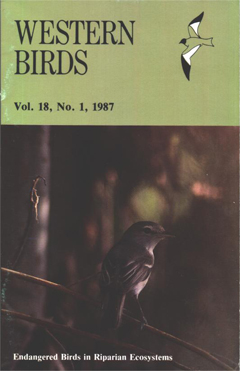
The Least Bell's Vireo (Vireo bellii pusillus) is a small, gray, migratory passerine that feeds mainly on insects. The normal clutch of four eggs is incubated for about 14 days. The young remain in the nest approximately 10–12 days. The Least Bell's Vireo arrives in its breeding habitat from mid-March to early April and departs in late August or September for its wintering range in Baja California, Mexico.
The Least Bell's Vireo usually constructs its nest low to the ground, primarily in willow-dominated riparian habitats, but also uses a variety of shrubs, trees, and vines. Nesting is now largely restricted to small, remnant segments of willow-dominated habitats. Its precarious status prompted the U.S. Fish and Wildlife Service (FWS) (1986a) to officially designate it as an endangered species on May 2, 1986. The state of California classified the vireo as an endangered species in 1980.