
THICK-BILLED WARBLER (IDUNA AEDON) AT GAMBELL, ALASKA: FIRST RECORD FOR NORTH AMERICA
Article Sidebar
Main Article Content
Abstract
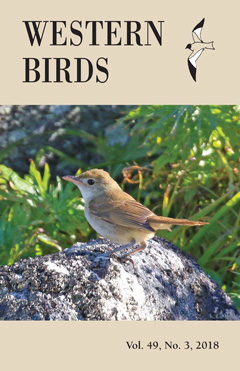
n the evening on 8 September 2017, in the “far boneyard” at Gambell, St. Lawrence Island, Alaska (63.78° N, 171.74° W), Victor and Ruben Stoll flushed a passerine they could not immediately identify. The “boneyards” are large pits excavated by the resident Yupik Natives seeking buried ivory and artifacts, a result of several thousand years of sea-mammal hunting from this island’s Northwest Cape. Working these pits turns the soil, which has resulted in the growth of relatively lush vegetation consisting of two species of Artemisia, known locally as “wormwood.” The combination of lush vegetation (reaching 0.5–1 m in height) and deep depressions that offer protection from the wind is attractive to migrant and vagrant landbirds in the otherwise flat, gravelly landscape. Soon thereafter, we, along with Greg Scyphers, Monte Taylor, and other birders then at Gambell, converged at the far boneyard in search of the bird. It was soon relocated and seen on the ground briefly by Lang, who suggested it was a Thick-billed Warbler (Iduna aedon), a bird he was familiar with from southeastern Asia and a species not previously recorded in Alaska or North America. Plumage features of this bird included brown upperparts, warm reddish-brown rump and tail, and pale underparts. Lang noticed that it had a very plain gray (“blank looking”) face, lacking any noticeable eye-line or pale supercilium. It also appeared to be relatively large bodied, and long tailed. These features eliminated any other Old World warbler previously recorded in North America. The bird was flushed several more times that evening but proved difficult to see and photograph well.